

Meteor spotted over Madrid on July 31 was as old as the solar system: ESA
Madrid shooting star'southward cometary origins unearthed
In brief
A fireball spotted over Madrid has had its astronomical ancestry unearthed. While information technology concluded its days burning up in Earth's temper on 31 July this year, the fragment began its life every bit part of Comet 169P/Bully, responsible for the annual Alpha Capricornids meteor shower.
In-depth
Meteor showers occur equally Globe passes through the debris-strewn path of a comet, which as it edges closer to the Sun and ices 'sublimate' from solid to gas, throws off a stream of material that lingers in identify. As these objects collide with Globe's atmosphere, they burn upwardly as bright meteors, the brightest of which are known as fireballs.
Such showers are periodic reminders that Earth is sweeping through an environment sprinkled with ancient remnants of the early Solar System. While rubber, these impressive calorie-free shows offer a cautionary tale, every bit these many minor fragments bely the larger objects they came from that once passed near Earth'due south orbit – and could do again.

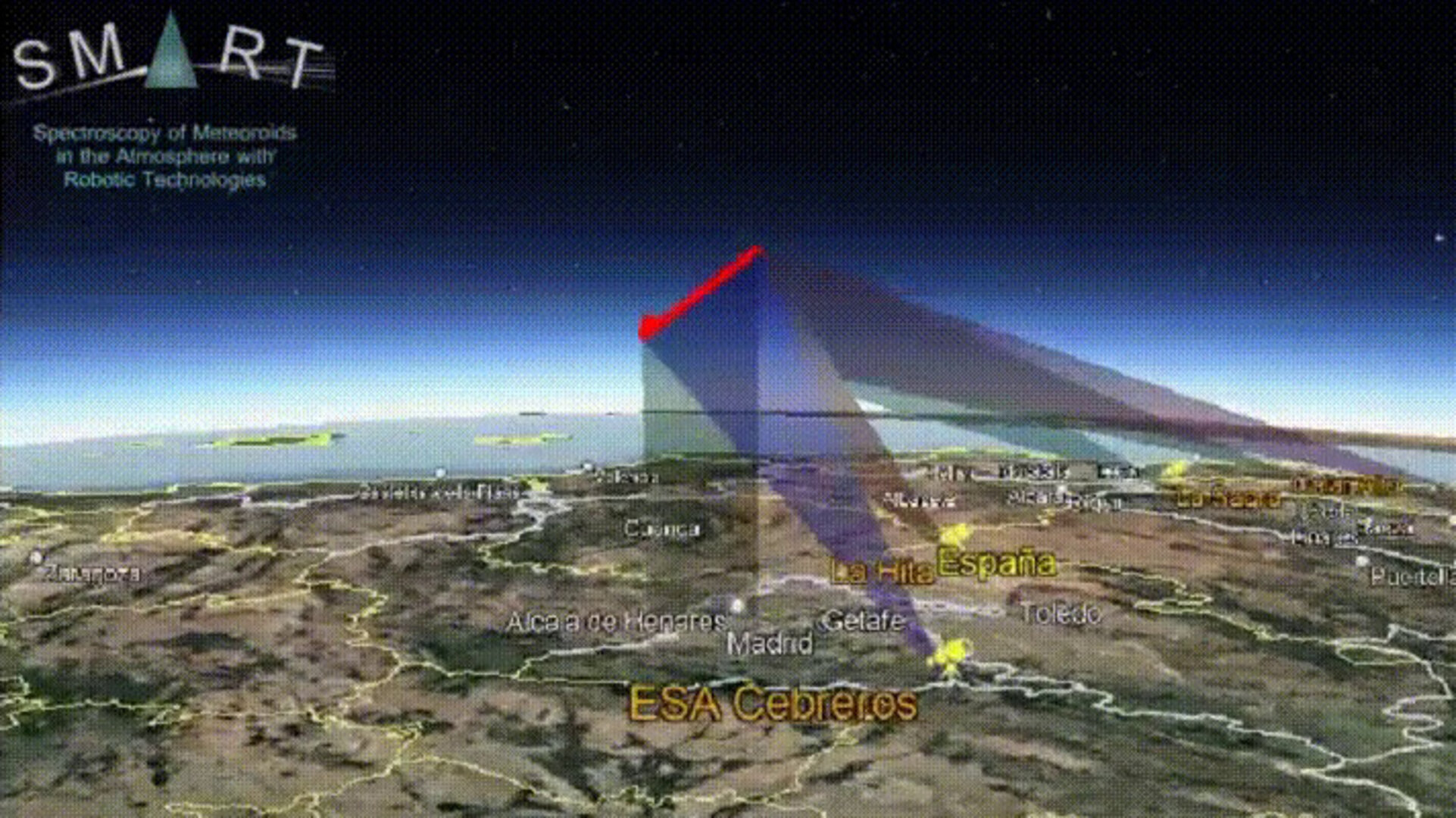
Falling star'south trajectory determined through European fireball photographic camera networks
Access the video
Using footage from on-the-ground cameras across Europe, including an ESA-operated camera of the AllSky7 network in Cebreros, Kingdom of spain, and cameras in the Southwestern Europe Meteor Network (SWEMN), the fireball'southward trajectory was calculated by SWEMN and its origins traced dorsum in time. Entering the temper at a meridian of 100 kilometres over Madrid and called-for upwards at 77 kilometres above the Castilian province of Guadalajara, the icy body is thought to accept been about 10 cm in size before contact with Earth.
It is idea that the Alpha Capricornids meteor shower was created iii 500 to 5 000 years agone when one-half of Comet 169P/Keen disintegrated and fell into dust. The comet itself will take formed at the same time as our Solar Organisation, around 4.6 billion years ago.
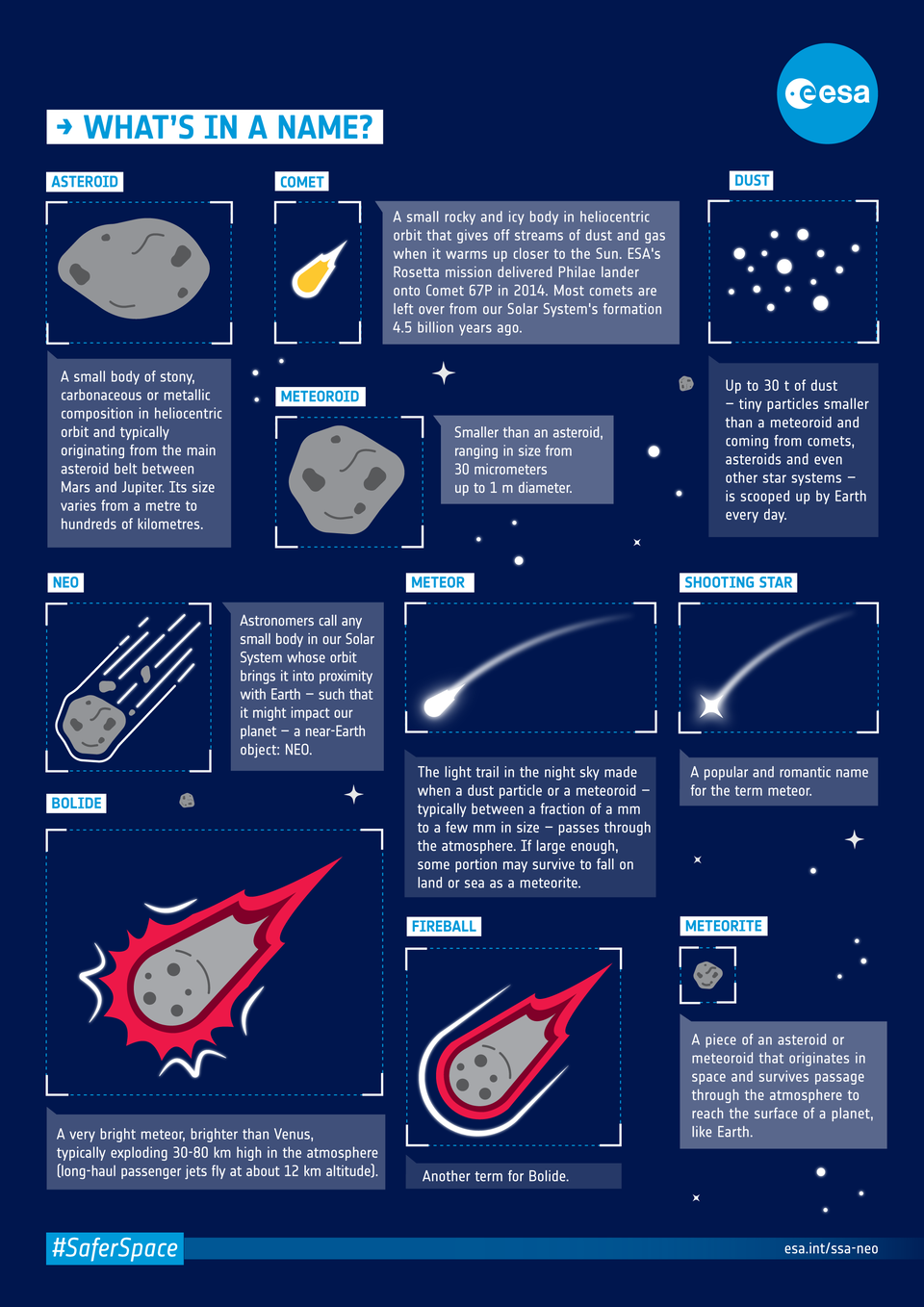
The dusty trail from this ancient comet has drifted into Earth's orbit creating infrequent but reasonably bright meteors. At its peak, only it creates only about v meteors per hour, but these are normally very brilliant and often become fireballs; particularly bright meteors.
As this drift continues, the shower is expected to get stronger. By the year 2220, it should be stronger than any current annual meteor shower. For at present however, you can take hold of information technology in its current form until nearly 15 August.
Source: https://www.esa.int/Space_Safety/Madrid_meteor_s_cometary_origins_unearthed
Posted by: brownpublienew46.blogspot.com
0 Response to "Meteor spotted over Madrid on July 31 was as old as the solar system: ESA"
Post a Comment